
Event curtain draping
CK project photo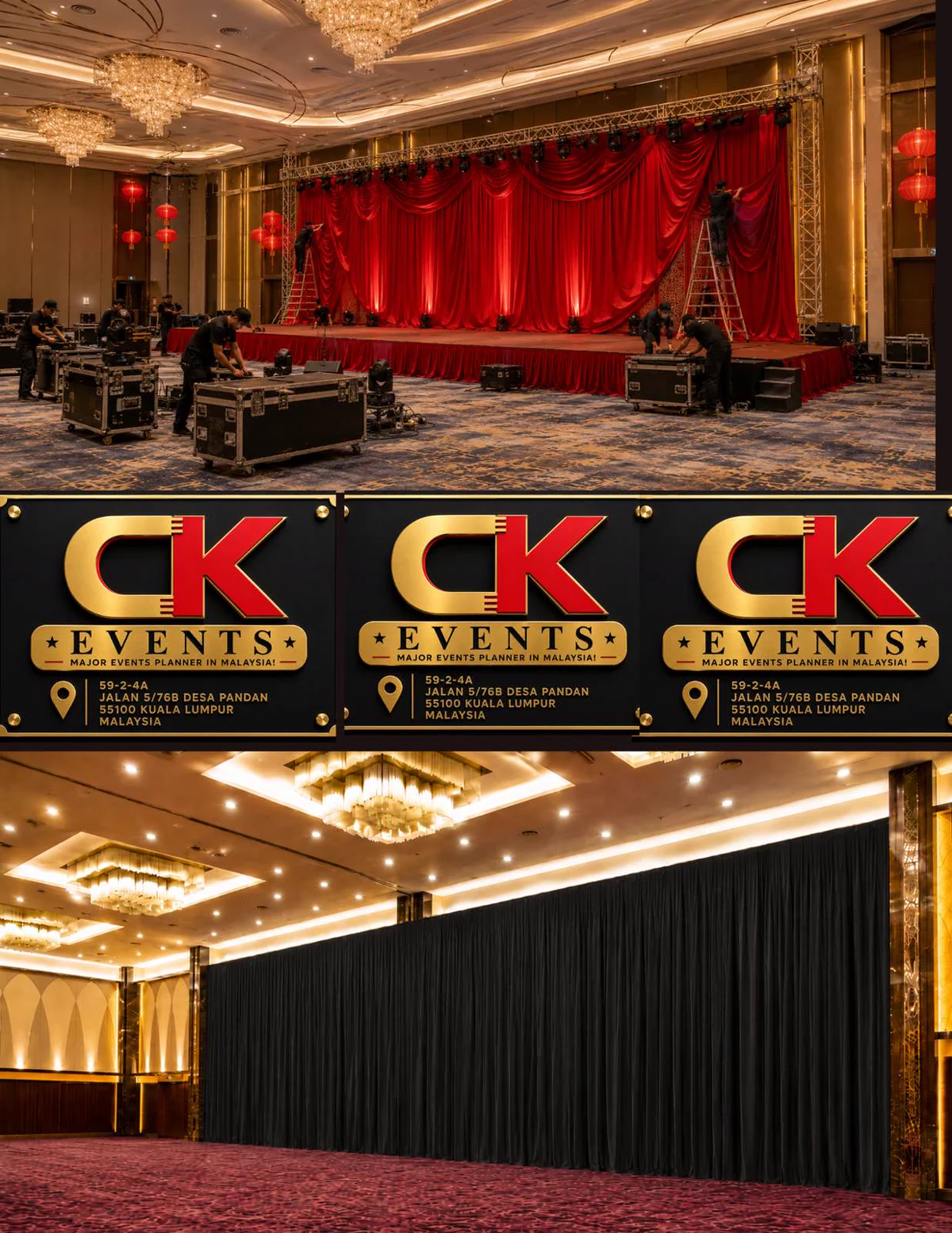
Compare blackout, sheer and decorative curtains for fitted installations, and hire draping for halls, stages and events. Choose the fabric, heading and track for the way you use the room.
Event curtain draping
CK project photo
Blackout and blockout curtains
Illustrative setup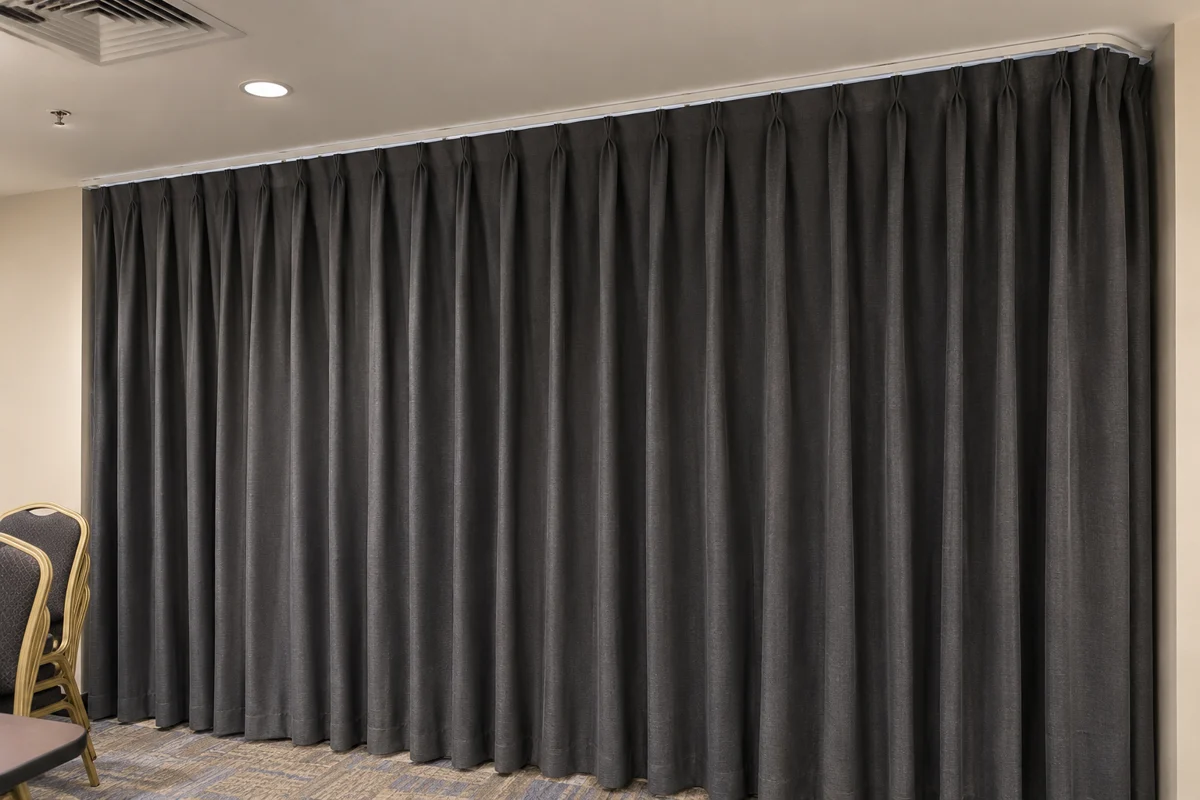
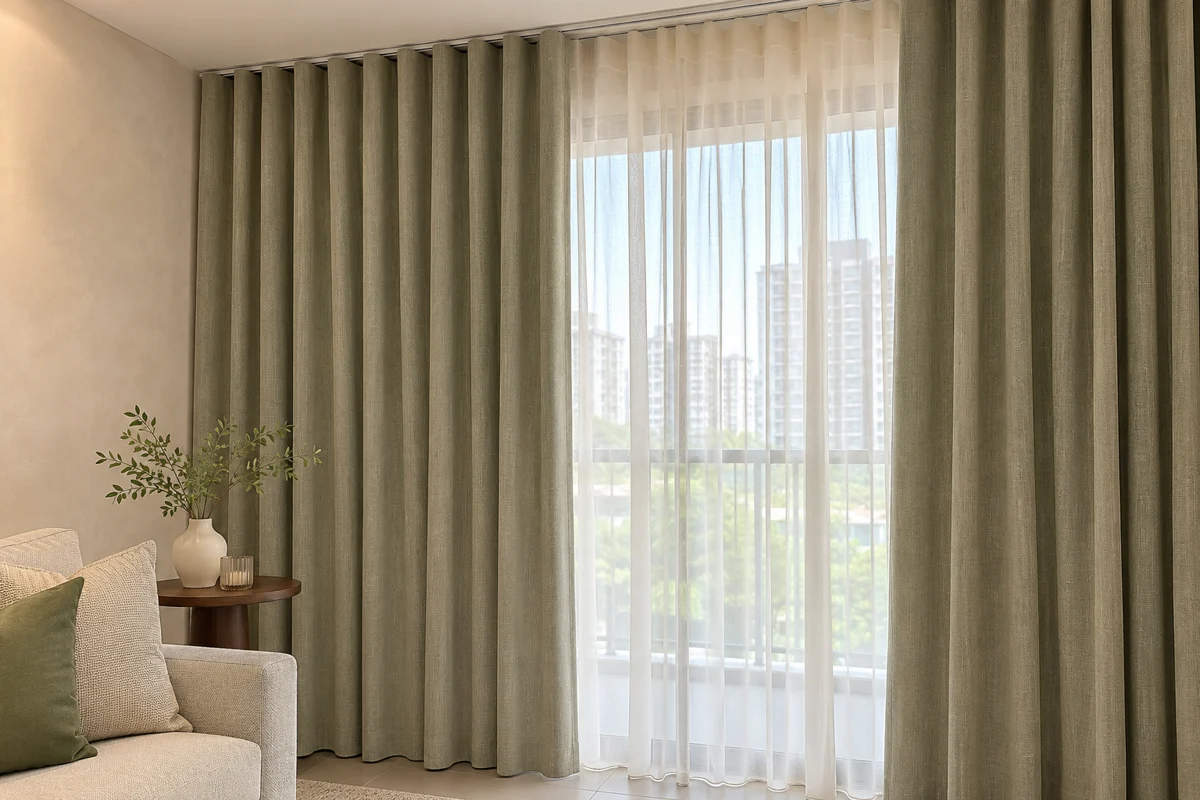
Fabric and sheer curtains
Illustrative setup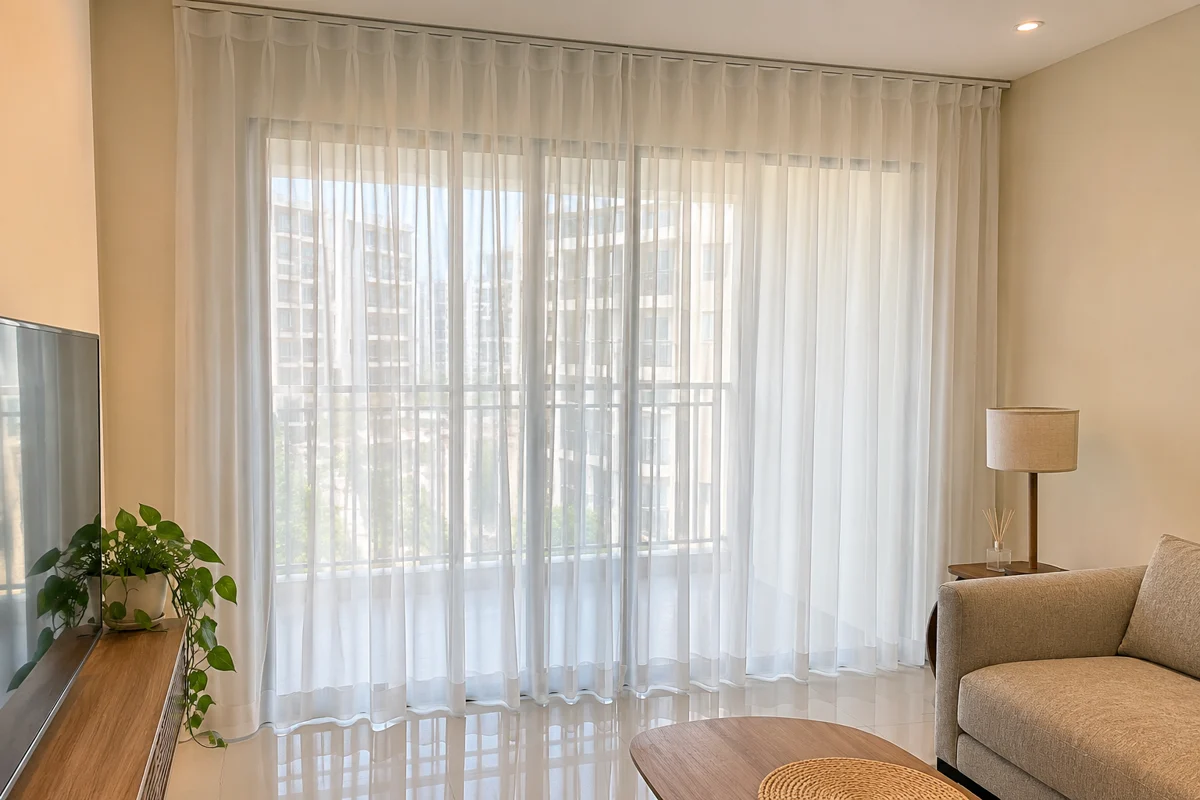
Decorative and wave curtains
Illustrative setup
Voile softens daylight. A denser light filtering weave reduces glare, while blackout fabric limits light through the panel. For bedrooms and projection rooms, check light at the joins and around all four sides.
Compare the sample in daylight and artificial light. Check how the fabric hangs, whether the pattern needs matching across panels and what care the cloth and lining require. Look at both faces where a curtain divides a room.
Use a compatible heading and track for wave folds, sewn pleats for a structured top or eyelets for a visible pole. Agree on fullness with the workroom. Deep folds, heavy lining and extra layers take more depth when open.
Choose a wall, ceiling or recessed mount after checking the supporting surface. Mark the draw direction, where the curtain will stack and what must stay clear around handles, air outlets and doors. Check track load and access if you are considering a motor.
Share the full track width, finished drop, photos, mount type, fabric or colour preference and whether the panel opens from one side or the centre. Measure both ends if the floor or ceiling appears uneven. Confirm final dimensions before sewing.
Ask which costs cover cloth and sewing, lining, rails, brackets, optional motors, delivery and fitting. For event draping, include support frames, access equipment as needed, setup and dismantling dates.
Measure the window and the full width of the proposed track or pole. Record the drop from the proposed hanging point to the sill or floor, plus any ledges, handles or ceiling recess. Include photos from the front and each side.
Yes. Two tracks let each layer open independently. Measure the space for both layers and their folds, recess depth and the room needed to stack the fabric at either end.
A 3 m track with a chosen fullness of 2× uses about 6 m of effective flat fabric width for one layer. The workroom calculates the actual material from the heading, fabric roll width, finished drop, pattern repeat, seams and hems.
Send a photo of the track, brackets and runners. Check the profile, fixings, expected panel weight and compatibility with the new heading. A switch to wave or an added blackout layer may change the hardware needed.
Follow the care information for the exact cloth and lining. Before washing, steaming or pressing, check the coating, trims, expected shrinkage and which hooks or weights should be removed.
Yes. Send the event dates and removal window for rented drapes. For a permanent install, send the window or divider measurements and the deadline. Ask us to quote the two scopes separately.
Start with the location, rough measurements and the date you need the space ready.